
Nicole Drewitz: summer schools over my time as a UW student
Introduction
Throughout my studies at UW, I attended four summer schools in three countries to fill specific gaps in my research training. This was in addition to an Erasmus+ traineeship at the University of Tromsø's (UiT’s) Climate Laboratory. It showed me something I had not expected coming from my undergraduate experience in Canada: that a small, remote institution can create access to leading researchers through institutional coordination, rather than just receiving limited collaboration with larger centers. These summer schools covered: Modern Ecological Monitoring in the AI Era, Governance of the Blue Economy in Limfjord, Open, Reproducible, and Transparent Science in Ecology, and Guarding Aquatic Ecosystems against Invasive Alien species using eDNA.
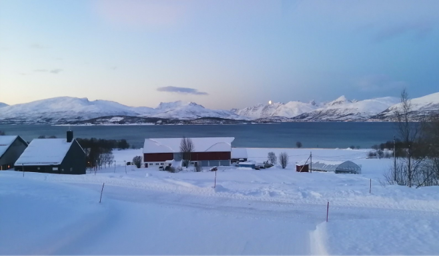
Figure 1: Noon moonset in Tromsø from the UiT Climate laboratory in December 2025.
Modern Ecological Monitoring in the AI Era
University of Iceland, May 2025
4 ECTS - https://ugla.hi.is/kennsluskra/index.php?tab=nam&chapter=namskeid&id=71191220253
I needed solid statistics for my thesis, not the kind taught at an undergraduate level that is rarely applied to ecology examples applicable to your research. This course was the best statistics overview I have received. I have rarely laughed so much in a class, but I have also never had professors teach statistical problem-solving using zombie apocalypse scenarios either. They brought in examples from South Georgia and Antarctic research, which made the theory feel more connected to real fieldwork. It also got hands-on with time-lapse image analysis and drone training for marine applications. Additionally, I learned how to write better prompts when asking AI to help generate or proofread code.
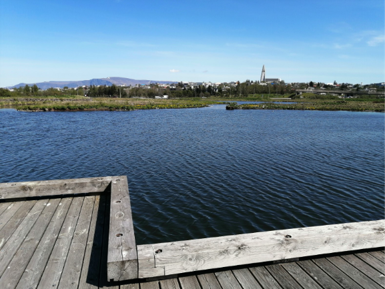
Figure 2: Lunch picnic spot in front of the Nordic House on the University of Iceland campus in Reykjavík.
The course objectives were that “After completing the programme, students will be familiar with how to approach statistics and ecological hypothesis testing in the AI era:
- Basic statistics on how to use AI to generate raw code and how to proof it
- Drone surveying techniques and best practices
- Camera trap and time-lapse camera monitoring of sentinel species
- Population modelling from surveys and demographic data”
One thing that struck me: when I decided to study at UW, I was drawn to the compact town for a specific reason. Growing up around Vancouver, Canada, I'd felt discouraged about city life. I knew most permanent research jobs are almost always in cities, but did not enjoy living there. So, I came to UW partly to test whether I could actually enjoy small-town living, and I do. This summer school showed me something else, that a small-town location doesn't mean isolation from serious research. UW is small, but I've taken courses and attended guest lectures taught by professors at leading institutions across Europe, North America, and more. This summer school (and others) just added more connections to that network.
Governance of the Blue Economy in Limfjord
Aalborg University, Denmark, June 2025
3 ECTS, PhD training school - https://rethinkblue.eu/news/call-of-interest-training-school-on-governance-of-blue-economy-in-the-limfjord-2025/ / https://rethinkblue.eu/events/navigating-the-future-of-ocean-governance-rethinkblue-training-school-sets-sail-in-denmark/
I was studying natural resource management in the European context, but didn't have a strong understanding of EU marine governance, coastal economies, or how mainland Nordic policy actually works. The Governance of the Blue Economy in Limfjord PhD training school gave me that foundation. I learned EU marine management policy, navigation mapping (including in Greenland), historical and modern coastal economies, and how larger, interconnected coastal systems operate differently from what I'd studied in Icelandic contexts. Through the application process, I also joined COST (European Cooperation in Science & Technology), specifically the ReThinkBlue action under the climate change & natural hazards working group. I did not know master's students could join these networks, and have since joined two other Nordic research networks.
The training school included five days on the LOA tall ship (during its 100th-year anniversary), tours of a subsea cable installation ship, the Danish Shellfish Centre, wind turbine production sites, the Limfjord Museum, the Sea War Museum Jutland, and sailing experience. It grounded the governance theory in actual infrastructure and practice along a major shipping corridor. Despite completing an internship in aquaculture management, this was my most comprehensive exposure to blue governance strategies.
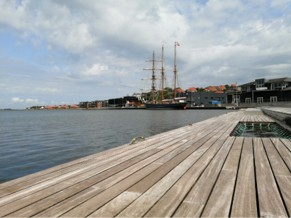
Figure 3: The LOA tall ship docked near the Klimatorium in Lemvig, Denmark. The Klimatorium houses a museum, meeting space, and test facilities for climate solutions.
Part of the course summary on my completion certificate is that the “PhD course […] immersed students in the maritime context through daily sailing activities aboard the vessel LOA. The program integrated lectures on regional planning, the history of Limfjord, collaborative research with coastal communities, fisheries management, maritime spatial planning, and the development of research partnerships.”
This included visits to:
- The Danish Shellfish Centre
- King Frederik VII’s Canal
- The Klimatorium (climate solutions creation and testing site)
- Danish Geodata Agency
- Danish Coastal Authority
- Port of Aalborg, Port of Thyborøn, and
- JD-Contractor (offshore energy support vessel)
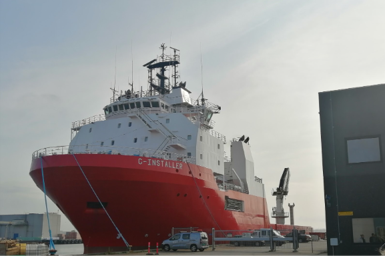
Figure 4: Subsea cable installation ship docked in Thyboron, Denmark.
The final assignment upon our return home was to create a Blue Governance Research Agenda. This was something I also had no prior experience with, but I greatly enjoyed developing my thoughts on “Coastal protections strategies for supporting food sovereignty policies”. My idea was inspired by the Limfjord Museum’s Aquavit Distillery on King Frederik VII’s Canal. In the agenda, I proposed that nature-based coastal protections could be combined with traditional food and medicinal plants to improve recreational harvesting access, especially in cities. I later developed a StoryMap on Sea buckthorn (a berry native to Denmark / https://arcg.is/1uj9C11 ) for my UW Coastal Food Systems course, partly because it aligns with the food sovereignty and sand dune stabilization angle I explored in my research agenda. See my objectives for the governance assignment below.
Objectives for coastal protection and coastal urbanization planning:
- Ensure equitable access to local natural ecosystems, including native culinary and medicinal plants.
- Expand ecosystem biodiversity goals to include protection and sustainable use of culinary and medicinal plants, and their natural habitats.
- Promote ecological management planning supporting Nordic right-to-roam policies beyond rural areas.
- Foster community participation in planning and stewardship, to ensure local knowledge and needs shape coastal protection strategies.
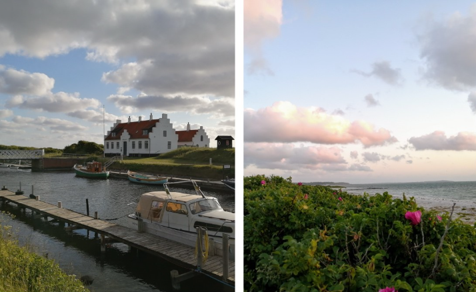
Figure 5: Limfjord Museum and Aquavit Distillery on King Frederik VII’s Canal in Løgstør, Denmark. Left, canal and museum; right, Limfjord and wild roses in front of the museum.
Open, Reproducible, and Transparent Science in Ecology
University of Bergen, Hjerkinn, Norway, November 2025
2.5 ECTS PhD course - https://www4.uib.no/en/studies/courses/bio940?start_semester=2025H
To improve my thesis in species distribution modelling during my UiT traineeship, I wanted to learn methods for reproducible workflows and how to work with open-source ecological data at scale. Project management skills like those covered in this course are often skipped in standard coursework. We learned how to use GBIF, GitHub, RStudio, and Quarto, not just for reports, but for building R packages, sharing workflows, and publicly storing datasets. The University of Bergen's biostats website (specifically the "Enough R to write a thesis" section) became a reference I still use. The emphasis was on coding for automation, workflows, and technical reporting you can actually reproduce years later, rather than one-off analyses. Before this, I had only worked with R files, spreadsheets, and creating images in RStudio. What I learned here changed how I think about working in research, not just as a student on short projects, but as someone who will need to scale projects and share analysis during employment after graduation. With the rise of AI, the course introduced newer tools like Google Earth Engine while prioritizing how to write code that's actually checkable.
From the course certificate:
“students gained knowledge and skills in open science, with an emphasis on acquiring key skills in:
(i) General introduction to Open Science
(ii) Data management skills, data handling and curation,
(iii) Using data repositories (GBIF) and data standards (Darwin Core),
(iv) Reusing and publishing data,
(v) Reproducible and transparent workflows,
(vi) Reproducible data analysis and reporting results,
(vii) Systematic reviews and meta analysis,
(viii) Artificial Intelligence (AI) for supported programming”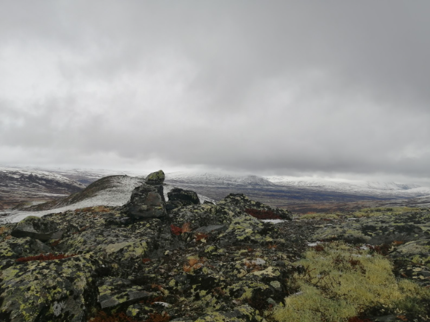
Figure 6: Viewpoint, a short walk from Hjerkinn basecamp.
The location was unusual, classes at a wild reindeer centre in the mountains, surrounded by a national park with Muskoxen and a large-scale vegetation restoration project following its use as a military firing range. The Hjerkinn basecamp we stayed at cooked Norwegian meals on-site for everyone, which meant longer class days and time to talk with professors and other students. During free time, I learned a lot about what ecology research jobs look like across different Norwegian organizations and regions, both from Norwegian researchers and international participants.
I took the long way there: ferry from Tromsø to Trondheim (where I met with my second thesis advisor, who is based there, and hiked in the coastal forests), then took the train to the course in Dovrefjell. It meant seeing a coastal latitudinal gradient and how the landscape changes as you move inland and up in elevation, crossing four of the ecoregions used in my thesis analysis. It also meant getting to assess Trondheim in person as a possible future place to live, since it has a large marine research industry. The new Norwegian Ocean Technology Centre (https://www.sintef.no/en/latest-news/2026/about-to-emerge-one-of-the-worlds-most-advanced-laboratories/ ) is just one example of the research investment scale.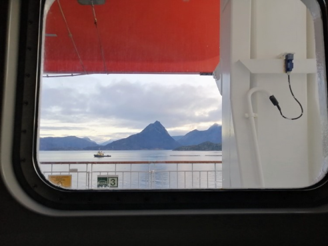
Figure 7: On board the Hurtigruten (i.e. the hurried route) ferry from Tromsø to Trondheim.
Guarding Aquatic Ecosystems against Invasive Alien species using eDNA
Nord University / GuardIAS, Bodø, Norway, July 2026
5 ECTS - https://www.nord.no/en/studies/courses/bio9011 (Master’s and PhD students) / https://guardias.eu/welcome-to-the-guardias-summer-school-2026/
This course gave me hands-on lab experience in genetics and bioinformatics, and another tool for extracting data from water samples relevant to species distribution modelling. These skills open more job opportunities, and fills a gap in my physical geography-based skillset. I've previously worked with colleagues using molecular biology tools like qPCR, but I had only ever taken introductory biology courses. The course was hosted primarily at Nord University’s new biology building, with state-of-the-art laboratories, and secondarily, we received field equipment demonstrations at the Faculty of Biosciences and Aquaculture research station, which shares facilities with NIBIO (the Norwegian Institute of Bioeconomy Research), and at a nearby creek. It was organized by the Horizon Europe Project, GuardIAS (Guarding European waters from Invasive Alien Species), bringing students and researchers from across Europe to participate.
The course learning outcomes were that “Upon successful completion of this course, students are expected to have good knowledge of the theoretical principles underlying eDNA, and an insight into the key applications of eDNA in IAS detection, management and control. Furthermore, they should be able to describe and critically assess the main methodological steps in an eDNA workflow for IAS and should be able to evaluate the strengths and limitations of eDNA approaches for IAS compared to traditional monitoring techniques.” (https://www.nord.no/en/studies/courses/bio9011 )
Nordland, was easily my favourite part of Norway, although all of Norway has the clearest water I have seen. Before the course, I visited Saltstraumen, the world's largest maelstrom. The park was beautiful, but I also understand why I have heard Norway called “the Canada of Europe”, because while the nature was beautiful, we have maelstroms on the west coast of Canada that look similar. More interesting was how many people were fishing, and the photos of glowing nudibranchs that another student had taken while diving between tidal surges. After the course, we hiked along a nearby beach covered in arctic bramble and wild orchids, with sheep and white sand.
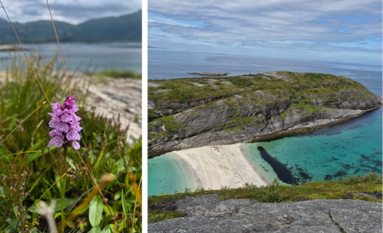
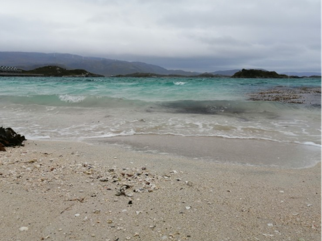
Figure 8: Hovdsundet beach hike near Bodø, Norway.
The course ended with a group project to design an eDNA-based monitoring protocol. We chose invasive brook trout in Italian alpine lakes. These small lakes were fishless systems where trout were introduced for recreational fishing, thereby reducing invertebrate biodiversity and the food available to amphibians. Conventional fish removal methods have been effective but labour-intensive. It is difficult to confirm eradication until either the fish rebound or eDNA sampling (which is more sensitive) confirms they are gone from a lake. The project showed how eDNA monitoring could complement existing conventional methods. I had to present the group project at the airport, which was probably good practice for future work experience. The final component of this course was to independently produce a report outlining a more detailed research proposal.
Key Brook Trout References
Parco Nazionale Gran Paradiso. (n.d.). Progetto Life+ Bioaquae. Parco Nazionale Gran Paradiso. Retrieved July 30, 2026, from https://www.pngp.it/en/nature-and-research/conservation-and-research/life-bioaquae
Tiberti, R., Bogliani, G., Brighenti, S., Iacobuzio, R., Liautaud, K., Rolla, M., von Hardenberg, A., & Bassano, B. (2019). Recovery of high mountain Alpine lakes after the eradication of introduced brook trout Salvelinus fontinalis using non-chemical methods. Biological Invasions, 21(3), 875–894. https://doi.org/10.1007/s10530-018-1867-0
Tiberti, R., Mattioli, G., Bello, L., Buchaca, T., Corapi, A., & Ventura, M. (2026). Intensive angling of non-native brook trout in high-mountain lakes: Insights for eradication actions and awareness-building. Hydrobiologia. https://doi.org/10.1007/s10750-026-06252-6
Wilcox, T. M., McKelvey, K. S., Young, M. K., Sepulveda, A. J., Shepard, B. B., Jane, S. F., Whiteley, A. R., Lowe, W. H., & Schwartz, M. K. (2016). Understanding environmental DNA detection probabilities: A case study using a stream-dwelling char Salvelinus fontinalis. Biological Conservation, 194, 209–216. https://doi.org/10.1016/j.biocon.2015.12.023
Final thoughts
These summer schools were not just about the fun travels. Each one addressed a skillset I was uncertain about: statistical methods, governance frameworks, reproducible science workflows, molecular biology, and further exposure to European research practices. As I move toward PhD applications, these experiences help shape my applications. I now have training in quantitative research skills that aren't siloed into a single approach, just as my interest in physical geography (i.e., Earth system sciences) is not limited to a single field. Instead, they explore feedback loops in Earth systems and their interactions. They shape how I am thinking about my own research direction, and they're the reason I can better articulate what I actually want to work on. For example, I enjoy research contributing to source-to-sea management because it recognizes the importance of viewing the water cycle as a whole system rather than dividing it into separate terrestrial and marine management areas.
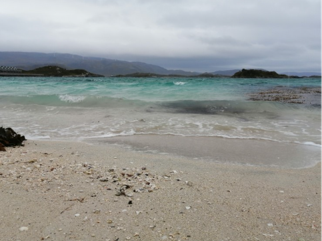
Figure 9: Sommarøy, Troms, Norway. Circumpolar Agriculture Conference excursion in September 2025. You can barely see the wind farm on the mountain we visited in this photo. The wind farm poses ice-throwing hazards, leading to land-use conflicts for traditional reindeer herding in winter.
I would like to thank the organizations that supported my participation: VerkVest (my labour union in Ísafjörður), COST ReThinkBlue, Erasmus+ and the Canadian Initiative for Nordic Studies. I would also like to thank UW and UNAK for connecting me to these funding opportunities.
Here are a couple more photos from conference trips I attended during my UiT traineeship J.
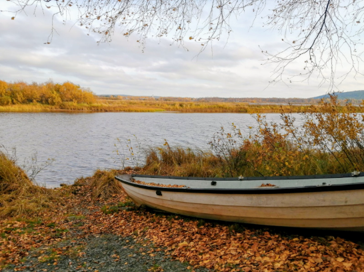
Figure 10: Rovaniemi, Finland. Nordic Wild Berry and Non-Timber Forest Products Conference in October 2025.
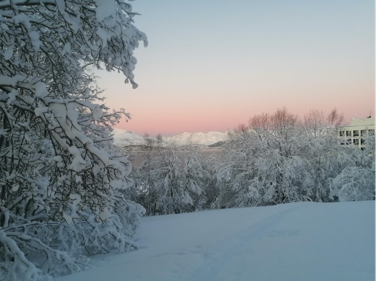
Figure 11: Return of the sun in Tromsø, shortly before the Arctic Frontiers conference in February 2026. The 2026 theme was “turn of the tide”.