UW alumna Lynnee Jacks
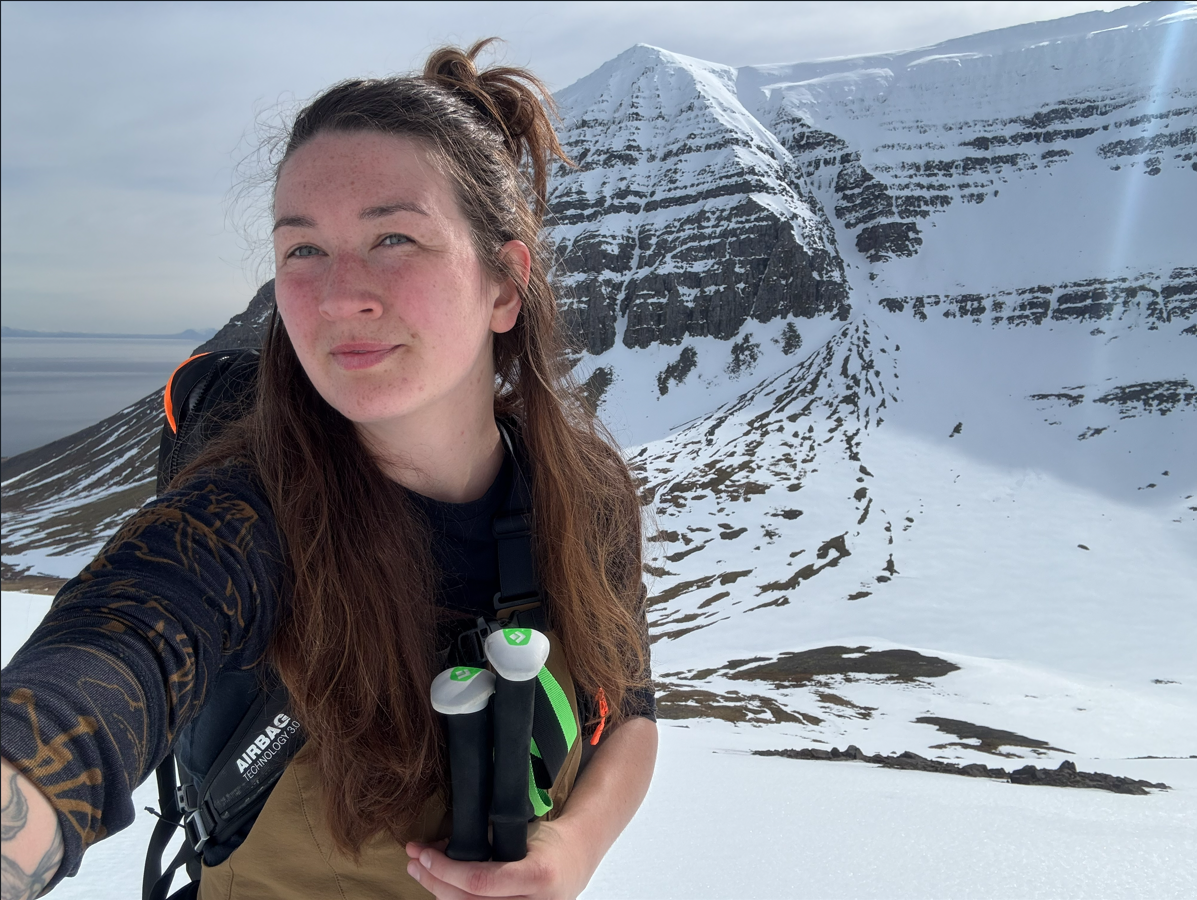
Last year we spoke to UW alumna Lynnee Jacks and found out what she was doing after her graduation. Today she is back at UW presenting a lecture and we pulled her aside for a quick chat.
What are you currently doing today?
I am a freelance contractor specializing in communications and storytelling for rural communities. I worked with the Oregon Coast Visitors Association for about three years to tell the story of their impact on coastal tourism and economies – and now my primary client is the Oregon Ocean Cluster, which is working to keep more of our Oregon-landed seafood in our local economy. I also have a couple of smaller clients including the tourism organization that manages all of rural Eastern Oregon.
I also run a Substack that tackles these rural topics from a more personal narrative lens.
What are you doing back at UW?
I’m here to bring my Iceland experience full-circle. The Oregon Ocean Cluster is currently emulating the Iceland Ocean Cluster’s (IOC) "100% Fish" initiative. After helping host the Blue Foods Forum in Portland—which brought together over 450 industry leaders—I’m back to help bridge these two worlds. I’ll be speaking to students about how Icelandic innovation is being used as a literal blueprint for coastal resilience in the Pacific Northwest.
I’m also here to close a loop on a 2023 project with Cycling Westfjords. Vestfjarðastofa had supported us with grant-funding to map backcountry routes in the Árneshreppur region. The project got sidelined by weather and my move back to the States, but this past weekend, we finally got back out there to ski those lines and finish the report. I’ll be publishing a story about it soon on Substack.
Can you tell me about the lecture?
The title of the lecture is “A Coastal Mirror: How Icelandic Innovation is Unfolding in Oregon” And the outline is “From regenerative tourism management to innovative product development: when it comes to Blue Economy innovation, the world is looking to Iceland.”
It explores how the Oregon Coast is following in Iceland’s footsteps to pioneer everything from 100% fish initiatives to stewardship messaging rooted in the authenticity of people and place.
Drawing on my experience from the UW Community and Regional Development program, I will detail my transition from academic theory to professional application in my home state, illustrating how an international story of community development is unfolding in Oregon much like the one here in the Westfjords.
What do you hope students or attendees take away from your lecture?
Living and working in Iceland, it’s easy to forget how special this place is. Innovation is encouraged and opportunities abound more than anywhere else I know. For those that choose to stay – this is an incredible place to build a career. You will be inspiring the world. For those who chose to leave, you’ll be taking back some of the most incredible knowledge and momentum into your careers around the world.
Since graduating from UW, how has your career or focus evolved in ways you didn’t expect at the time?
I didn’t expect to become a "tourism person". I had always worked in communications, so a regional development degree was adjacent, if anything. I loosely had an idea of the kinds of work that might be available: city planning is the main thing that came to mind. But it really opened up a whole world of work that I didn’t know existed or was needed.
Policy experts; NGO leaders, tourism champions, accessibility innovations, trail work and event management – it all flows into the economic system that makes rural communities thrive.
Even still, I find it hard to call myself an expert in rural communities–but I have spent more time than I ever anticipated talking to the folks that make up some of the most special places on earth, and finding ways to tell impactful stories about the work that is happening to keep those places resilient in the face of much change.
What perspective do you have now, looking back at your time at UW, that you didn’t have as a student?
Same as above: I saw a limited perspective of where this study/work might take me. Now, I do wish I could go back another round with different eyes. I am sure there are lectures I would have paid extra attention to.
It all is so applicable – even the field trip days when we would tour from avalanche barriers to aquaculture and fish factories – this is something I did on the Oregon Coast throughout my time with the tourism management org. We toured our communities, got to know the people who made them tick – learned how above-ground seaweed cultivation and urchins farms work – how ports manage their catch, and the local markets they sell to.
How does it feel to come back to Ísafjörður and UW in a professional capacity rather than as a student?
It feels like reaching a mountain pass. I can look back and see the path I took from being a student here to applying these theories in Oregon. I’m seeing the same challenges of housing, climate change, and economic diversification in the Westfjords that I see on the Oregon Coast. Coming back as a professional doesn't mean I have all the answers; it just means I have a better map now.
Has anything about UW or the community changed since you were last here, or does it feel familiar?
I am living in a student house again for a few weeks, with a new cohort. The house feels so similar to when I first arrived, and the mix of old and new faces feels comforting and familiar. Other small comforts: like the houses with silly names, the simple joy of soaking in a hot pool in the sunshine – these tethers to this place are strong and sensory, and it is like falling back into a familiar rhythm that I have so loved.
What advice would you give current UW students who are hoping to follow a similar path?
Don't worry about being a specialist in just one thing; focus on becoming a translator. The magic of this degree is that it teaches you to speak 'government,' 'ecology,' and 'business' all at once. In the professional world, the people who can bridge the gap between a fisherman’s needs, tourism impacts, and a policymaker’s goals are the ones who actually get things done. Keep your perspective wide, because your value lies in seeing the whole system when everyone else is looking at just one part.