
Coastal and Marine Ecology
- Autumn 2025
- Kennari: Dr. Filipa Samarra
Um námskeiðið
Understanding the links between organisms and environment is important for an effective management of our natural resources. This three-week course focuses on patterns and processes of species occurring in coastal and marine environments. We will cover simple and complex ecological processes and how these operate in different systems. Finally, topics of conservation biology and ecosystems services will also be addressed.
The course includes lectures, workshops, guest speakers and field trips. Students will also experience a variety of methods for surveying species and habitats
Kennari
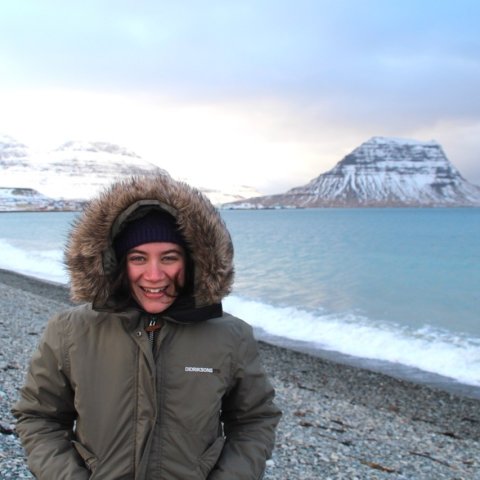
er atferlisvistfræðingur með sérstakan áhuga á félags- og fæðuvistfræði sjávarspendýra og hljóðsamskiptum þeirra. Rannsóknir hennar beinast að vistfræðilegum og atferlislegum breytileika innan tegunda, samspili milli tegunda og áhrifum umhverfisbreytinga. Stór hluti þessarar vinnu snýr að háhyrningum, toppafræningjum hafsins, og er hluti af Icelandic Orca Project, sem er langvarandi vöktunar- og rannsóknaráætlun á háhyrningum við Ísland, sú elsta sinnar tegundar.
Kennsluskrá
The course explores patterns and processes of marine environments. The main emphasis of the course is on the population and community ecology, and environmental challenges faced by coastal and marine organisms and humans on a global scale. Lectures provide in depth understanding of ecological concepts and processes, including biological diversity, distribution and dispersal, principles of population growth, primary and secondary production, decomposition and nutrient cycling, species interactions, trophic dynamics and food webs, ecosystem stability and function, disturbance and succession of communities. Furthermore, human induced impacts on coastal and marine ecosystems, and the conservation of such systems are discussed.
Discussion sessions and writing assignments serve to deepen the understanding of selected theoretical and practical concepts, approaches or applications as well as to train students in reading and writing scientific papers.
On completion of the course, a student:
- has an understanding of the role of coastal and marine ecology in environmental and natural resource studies, marine management and decision-making.
- has an understanding of the basic ecological principles of population, community and ecosystem ecology as well as the main patterns and processes in marine environments.
- has an understanding of the consequences of the major human induced impacts on coastal and marine ecosystems.
- has gained practice in reading and writing sections of scientific papers.
- can link human impacts on marine ecosystems to potential management actions.
- can read most scientific papers in ecology and discuss basic ecological subjects in an oral and a written form.