
Here below you can find all master courses the University Centre offers. All courses are taught in 1-3 week modules running from August through June. See how the courses are organised in the teaching schedule for both programs. Usually 2-3 courses are taught at the same time, but students may only enroll in one course at a time.
The master courses are available to you whether you plan to pursue a degree or just take a course or courses. Please review the options for guest studies to determine how you can apply.
For further information, contact the Administrative Director of Education and Teaching.
Icelandic Society and Environment
- Autumn 2026
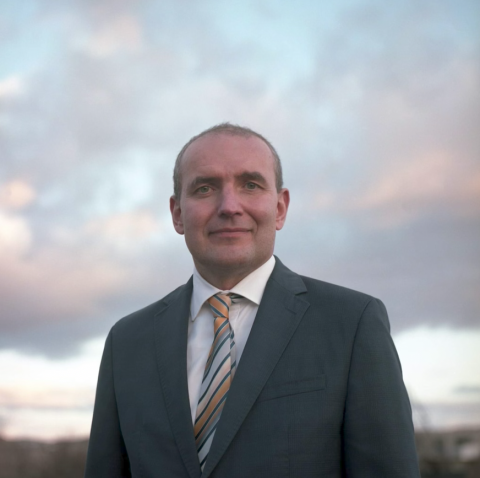
- Instructor: Dr. Guðni Th. Jóhannesson
About the course
The course explores the context of society, politics, history, economy, environment and natural resources in Iceland regarding both land and sea. As a developed, resource rich, remote and sparsely populated island in the North Atlantic Ocean, Iceland has distinct aspects. For example, the country’s diverse geology and homogenous demography, which are not easily comparable to neighboring nations. Emphasis is placed on exploring Iceland’s international image regarding the environment and natural resources. This includes how the country’s nature may be linked to the self-image of the modern Icelander, nature as a source of nationalism, and how this has manifested regarding utilization vs. conservation of natural resources.
Instructor
Guðni Th. Jóhannesson served as President of Iceland from 2016 to 2024 and is a Professor of History at the University of Iceland.
Guðni received his PhD in History from Queen Mary, University of London, in 2003. Prior to this, he studied history at the University of Oxford, earned a master’s degree in History from the University of Iceland, and completed a BA in History and Political Science at the University of Warwick in England.
Following his university studies, Guðni worked as an author, journalist and translator, and for a time as a journalist with the Icelandic National Broadcasting Service (RÚV). He also taught part-time at the University of Iceland and Bifröst University, as well as at the University of London while completing his doctoral studies. From 2007 to 2010, he was a lecturer at Reykjavík University, after which he worked as an independent scholar at the Reykjavík Academy. From 2013 to 2016, Guðni taught history at the University of Iceland, where he held the positions of lecturer, associate professor and, ultimately, professor.
From 2004 to 2007, Guðni served as Chair of the Icelandic Historical Association, and from 2011 to 2015 as President of the Icelandic Historical Society. He was also Chair of the Board of the National Archives of Iceland from 2015 to 2016 and served on a number of other boards, committees and councils.
Guðni has written several popular and highly regarded works of history, as well as numerous academic articles on Icelandic history and contemporary affairs. He has received various awards and honours for his work. Two of his books have been nominated for the Icelandic Literary Prize, and in the United Kingdom he received the prestigious Julian Corbett Prize in Modern Naval History. In 2017, he was awarded an honorary doctorate by Queen Mary University of London. He received further honorary doctorates from the University of Oulu in Finland in 2024 and the University of the Faroe Islands in 2026.
Learning outcome
On completion of the course a student:
- has acquired general knowledge on Icelandic society and environment.
- can identify how Icelandic culture and history are linked to Iceland’s international image regarding environmental issues.
- can evaluate current topics related to Icelandic society and environment in an interdisciplinary context.
- can construct and communicate a well-supported argument using information from course lectures, reading material, and own perspective.