
Here below you can find all master courses the University Centre offers. All courses are taught in 1-3 week modules running from August through June. See how the courses are organised in the teaching schedule for both programs. Usually 2-3 courses are taught at the same time, but students may only enroll in one course at a time.
The master courses are available to you whether you plan to pursue a degree or just take a course or courses. Please review the options for guest studies to determine how you can apply.
For further information, contact the Administrative Director of Education and Teaching.
Outlook to the Future: Coastal Arctic Scenarios
- Spring 2027
- Instructor: Adam Stepien
About the course
The course brings together four elements: 1) an overview of different foresight methods, 2) a scenario workshop focused on the future of a small Arctic coastal community, 3) basic tools in project planning, 4) developing a – mock or real - proposal for a project relevant for Arctic coastal communities.
Through problem-based learning, the course integrates students’ knowledge from different disciplines and expands it further. Students learn basic methodologies for thinking about the future: techniques that are commonly used in private and public organizations.
In a workshop, students apply these foresight methods in creating future scenarios for northern coastal settlements. The work on scenarios allows students to develop a more integrated view on developments, understand uncertainties, drivers and dynamics of Arctic change. They identify gaps in their knowledge and experience advantages and disadvantages of commonly used scenario methods.
In real life, foresight exercises are followed by strategy development and decisions on concrete actions; therefore, the last week of the course is dedicated to project planning. Students are familiarized with basic project planning tools, such as logical framework, milestones and activities charts (these are also used in foresight work). With that skill set, they develop their own project proposal.
Instructor
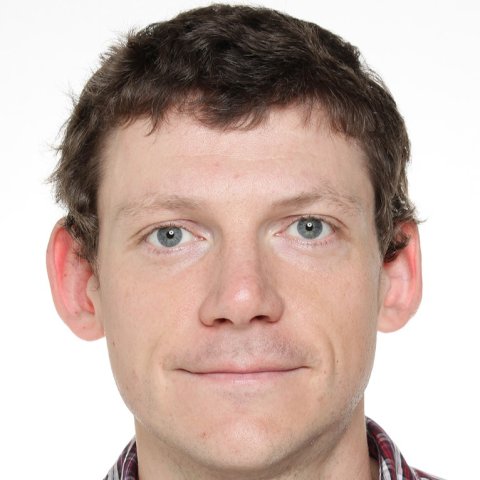
is a political scientist working at the Arctic Centre of the University of Lapland. In his research, he focuses on Arctic governance, and in particular on the role of the European Union in the Arctic. Adam also deals with indigenous politics and regional development in northern peripheries. He has participated in a number of policy support and advisory projects, where the future of the Arctic is often being considered.
Learning outcome
On completion of the course a student:
- is familiar with and can use foresight methods in planning, as well as select appropriate foresight tools for different planning needs.
- can explain how foresight techniques can make innovation, regional development and marine policies more robust.
- can identify the change processes at play in the Coastal Arctic and understand their characteristics.
- can analyze the interrelationships between drivers and be able to consider their impacts.
- can test new business ideas against alternative versions of the future.
- can test ways of regional development policies and marine management policies against alternative versions of the future.
- has demonstrated ability in communicating foresight techniques to stakeholders in an exemplified marine management or regional development situation.
- is able to plan and elaborate project proposals with the application of basic project management tools.