
Sustainable Waste Management in Coastal Communities
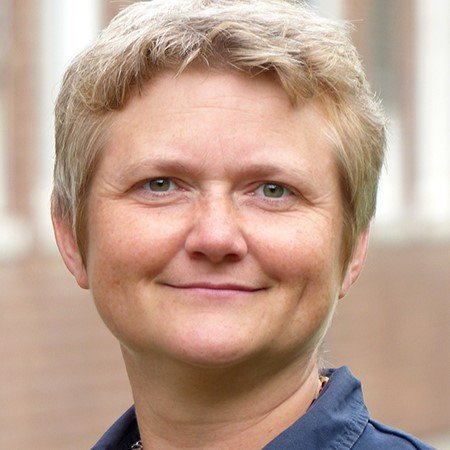
From May 26 to June 5, students at the University Centre of the Westfjords took part in the course Sustainable Waste Management in Coastal Communities, taught by Dr. Felicitas Schneider.
Waste management is a complex and multidisciplinary issue, with no single solution that fits every place or community. Decisions must take into account legal frameworks, regional conditions, available technologies and environmental considerations. This is especially important in sensitive coastal regions, where communities may face particular challenges related to infrastructure, transport, pollution pathways, marine environments and extreme climate conditions.
The course introduced students to key aspects of waste management, including different waste types, waste sources and characteristics, risk potential, disposal options and the waste hierarchy: prevention, reuse, recycling and disposal. Students also explored legal aspects, international agreements on waste export, waste logistics and the environmental impact of waste, with both global perspectives and local examples.
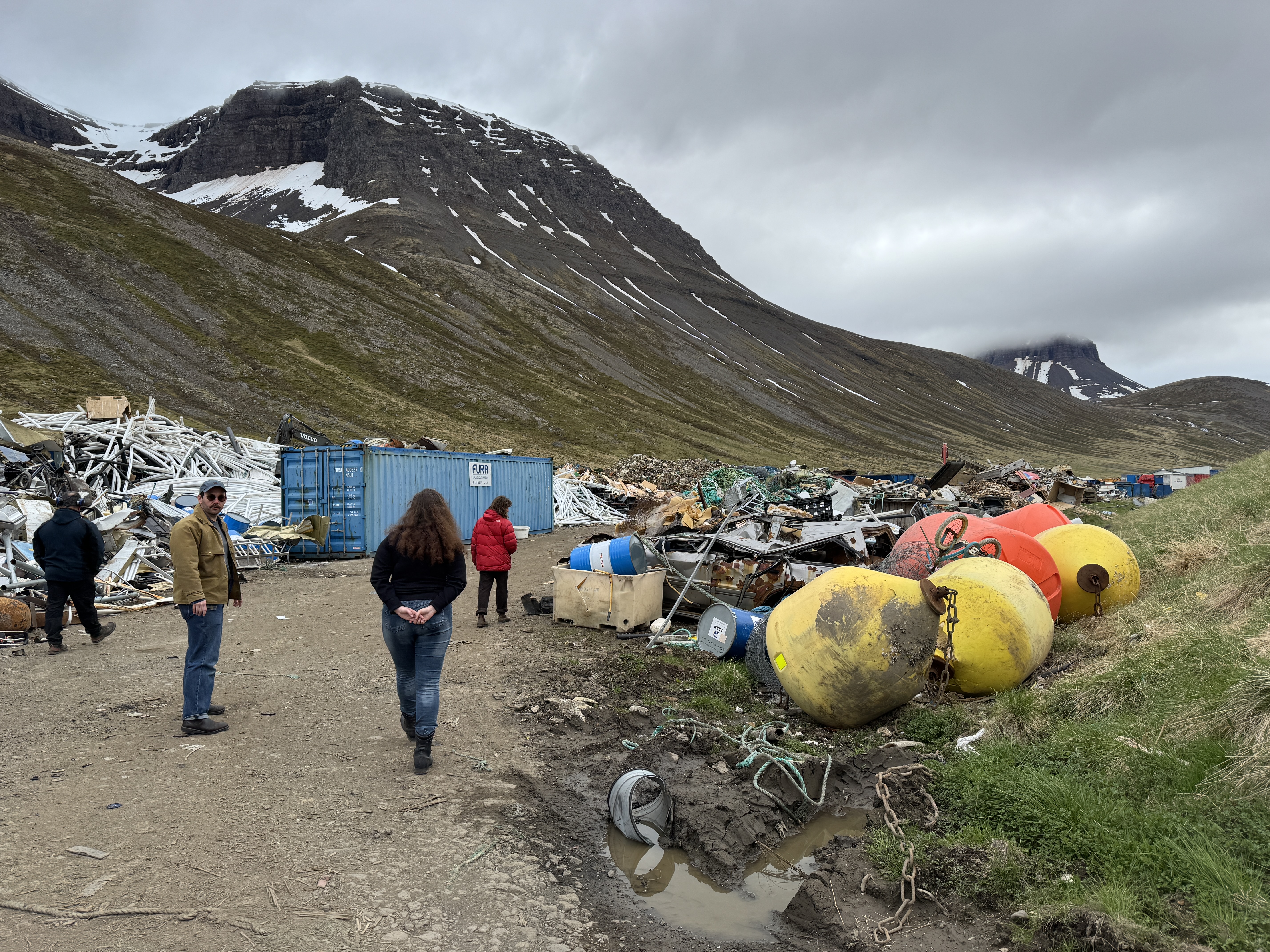
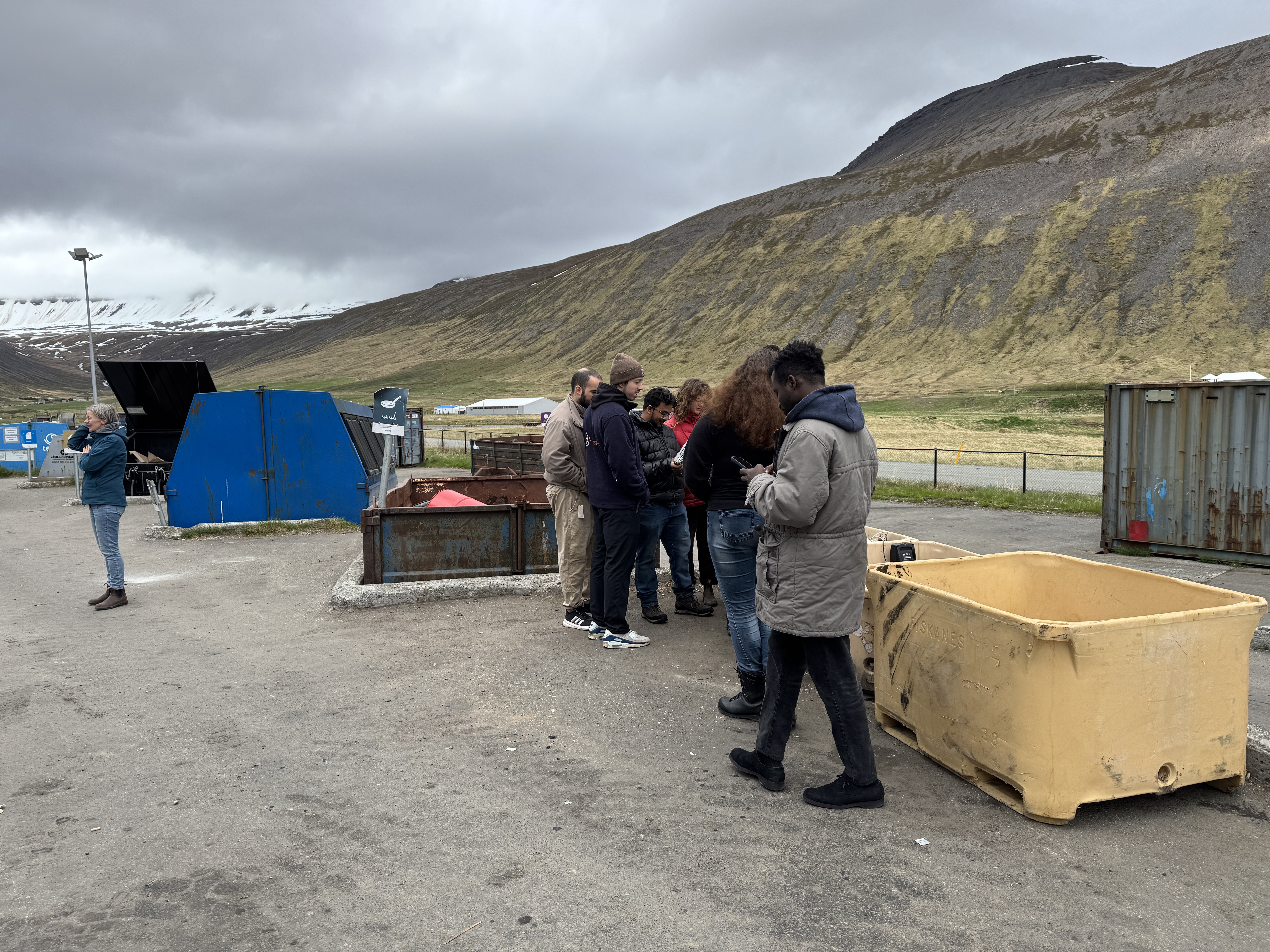 As part of the course, students visited Funi and the sorting plant in Ísafjörður, where representatives from the company Kubbur welcomed the group and showed them around. The excursion gave students valuable insight into local waste management practices and the practical challenges and opportunities connected to waste sorting, handling and treatment in a coastal community. We are very grateful to Kubbur for welcoming our students every year and for sharing their knowledge and experience with us.
A central focus of the course was waste prevention, which is an important step towards sustainable development. Food Loss and Waste (FLW) was given special attention, as it contributes significantly to the inefficient use of resources on a global scale. Through this focus, the course connected waste management with broader discussions on the Sustainable Development Goals, climate change, sustainable diets and resilient food systems.
Dr. Felicitas Schneider brings extensive experience to the topic. She holds a diploma degree in Civil Engineering and Water Management from Austria and has worked in the waste management sector for many years as a university researcher and teacher. Her work has focused particularly on waste prevention and Food Loss and Waste. Since 2017, she has worked at the Thünen Institute in Germany, where she coordinates the Collaboration Initiative Food Loss and Waste, launched through the Meeting of Agricultural Chief Scientists of G20 countries.
 By the end of the course, students had gained tools to distinguish between waste and by-products, assess the risks of specific waste streams, consider sustainable treatment options, and develop alternative solutions within existing waste management systems. The course also encouraged students to think about how waste management can be included in regional planning, particularly in coastal and marine environments.
Sustainable waste management is a major challenge for coastal communities, but also an important opportunity. Courses like this help prepare future decision makers to understand the connections between waste generation, regional conditions, environmental impacts and sustainable policy solutions.