
Practical Tools for Stronger Communities
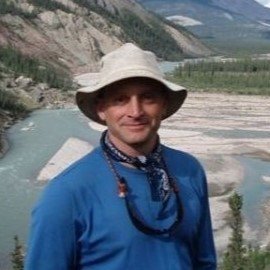
From June 8 to 19, students at the University Centre of the Westfjords took part in the course Tools for Community Development, taught by Dr. John Colton.
The course explored how communities can influence their own futures and how practical tools, methods, and frameworks can support community and regional development. Particular attention was given to the role of local agency, self-determination, power, and community participation in creating meaningful and lasting change.
Throughout the course, students worked with a range of community development approaches, including Asset-Based Community Development, placemaking, stakeholder mapping and power analysis, participatory learning and action, community capital frameworks, Theory of Change, and logic models.
Rather than considering these approaches only in theory, students regularly applied them to local and regional examples. Theory of Change and logic models were incorporated directly into the learning process, helping students create visual pathways connecting community needs, planned activities, and intended outcomes.
Case studies from coastal, remote, and Indigenous communities provided further insight into how community development tools can be adapted to different social, political, cultural, and environmental contexts. Students also examined the conditions that enable communities to thrive and considered how development processes can strengthen local control and support community-defined priorities.
The course was taught by Dr. John Colton, who has worked at Acadia University in Wolfville, Nova Scotia, for more than 20 years in the Community Development and Environmental and Sustainability Studies programmes. His applied research covers both terrestrial and marine environments and focuses on achieving meaningful outcomes for communities.
Dr. Colton has worked extensively with First Nations communities on economic development initiatives and with rural coastal communities and local and provincial governments exploring the potential of marine renewable energy. His research interests include community benefits, public engagement, and the processes that influence the social acceptance of development projects. He is also a founding member of the Acadia Tidal Energy Institute and serves as Head of the Department of Community Development.
Alongside his academic work, Dr. Colton has worked in adventure and ecotourism since the late 1980s, guiding wilderness river expeditions in remote areas of Alaska, British Columbia, Yukon, and the Northwest Territories.
Dr. Colton describes teaching at the University Centre as a highlight of his year and values the immersive learning experience created by engaged students and a programme closely connected to its surrounding community and environment.
By the end of the course, students had developed a stronger understanding of the frameworks and strategies used in applied community development. They also gained practical experience in identifying community assets, analysing power and stakeholder relationships, and using Theory of Change and logic models to design and evaluate community initiatives.