
Planning for Climate Change in Coastal Regions at UW
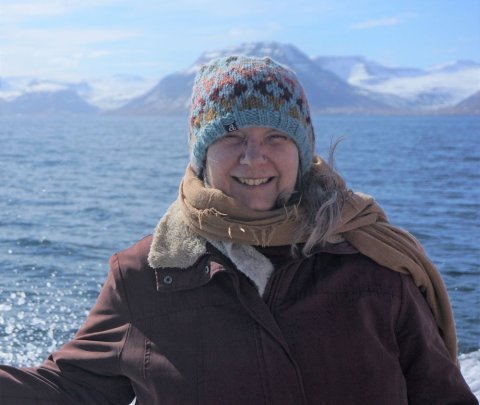
From 16 March to 1 April, the course Planning for Climate Change in Coastal Regions: Adaptation and Mitigation is taught at the University Centre of the Westfjords, where students take a closer look at one of the most pressing issues facing coastal communities today.
The course explores the major projected impacts of climate change in coastal areas under different UNFCCC scenarios and gives students the opportunity to examine how societies can respond. Along the way, they are introduced to a range of strategies and tools aimed at helping communities adapt to future conditions and become more climate resilient.
Among the topics covered are community-based adaptation measures, capacity-building, hard and soft protection responses, and economic incentives. The course also looks at the scientific foundations and societal context of different mitigation strategies, including blue carbon approaches, geoengineering, and carbon sequestration and storage technologies.
Just as importantly, students are encouraged to think critically about the wider questions surrounding climate action. Issues such as resilience, justice, and equity within and between generations are central to the course as students assess the options available for confronting anthropogenic climate change.
The course is taught by Dr. Patricia Manuel, Professor of Planning at Dalhousie University in Halifax, Nova Scotia, Canada. As a geographer and environmental planner, she teaches widely in community and environmental planning and conducts applied research on climate change adaptation, wetland and watershed planning, and marine spatial planning.
Dr. Manuel also speaks warmly about her connection to UW and the Westfjords:
By the end of the course, students will be able to explain expected climate impacts in coastal regions, discuss the strengths and weaknesses of different adaptation strategies, critique the effectiveness and sustainability of mitigation options, and evaluate the role of risk, vulnerability, equity, and justice in regional climate planning.
With its blend of science, planning, and social perspectives, the course offers students valuable insight into the challenges — and possibilities — of building more resilient coastal futures.
Read more about the course here.
All master's courses taught in 1–3-week modules at the University Centre of the Westfjords and are open to participants from both universities and the business community. If you are interested in attending a single course at the University Centre, you can familiarize yourself with our course catalogue and submit an application for a single course.