
Outlook to the Future: Students Explore Coastal Arctic Scenarios
From February 9–27, the University Centre of the Westfjords holds the course Outlook to the Future: Coastal Arctic Scenarios, an interdisciplinary course that gives students practical tools for thinking ahead and planning for change in Arctic coastal communities.
The course combines four key elements: an introduction to different foresight methods, a scenario workshop focused on the future of a small Arctic coastal community, basic tools in project planning, and the development of a mock or real project proposal relevant to Arctic coastal communities.
Using a problem-based learning approach, the course draws together students’ knowledge from different fields and helps them expand it further. Students are introduced to core methodologies for future-oriented thinking—approaches that are widely used in both public institutions and private organizations.
A central part of the course is a workshop in which students apply foresight methods to create future scenarios for northern coastal settlements. Through this work, they develop a broader and more integrated understanding of Arctic change, including the uncertainties, drivers, and dynamics that shape the region. The scenario process also helps students identify gaps in their own knowledge while exploring the strengths and limitations of commonly used scenario methods.
Because foresight work in practice is often followed by strategic planning and concrete decision-making, the final week of the course is dedicated to project planning. Students are introduced to essential project planning tools, including logical frameworks, milestones, and activity charts—tools that are also relevant in foresight work. Building on these skills, they go on to develop their own project proposals.
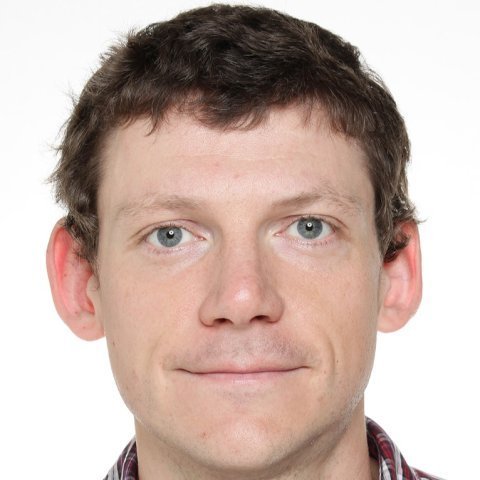
The course is taught by Adam Stepien, a political scientist at the Arctic Centre of the University of Lapland. His research focuses on Arctic governance, particularly the role of the European Union in the Arctic. He also works on indigenous politics and regional development in northern peripheral areas. In addition to his academic work, he has participated in a number of policy support and advisory projects in which the future of the Arctic has been a key consideration.
Read more about the course here.
All master's courses taught at the University Centre of the Westfjords are open to participants from both universities and the business community. If you are interested in attending a single course at the University Centre, you can familiarize yourself with our course catalogue and submit an application for a single course.