
Courses: Practical skills in assessment and communication
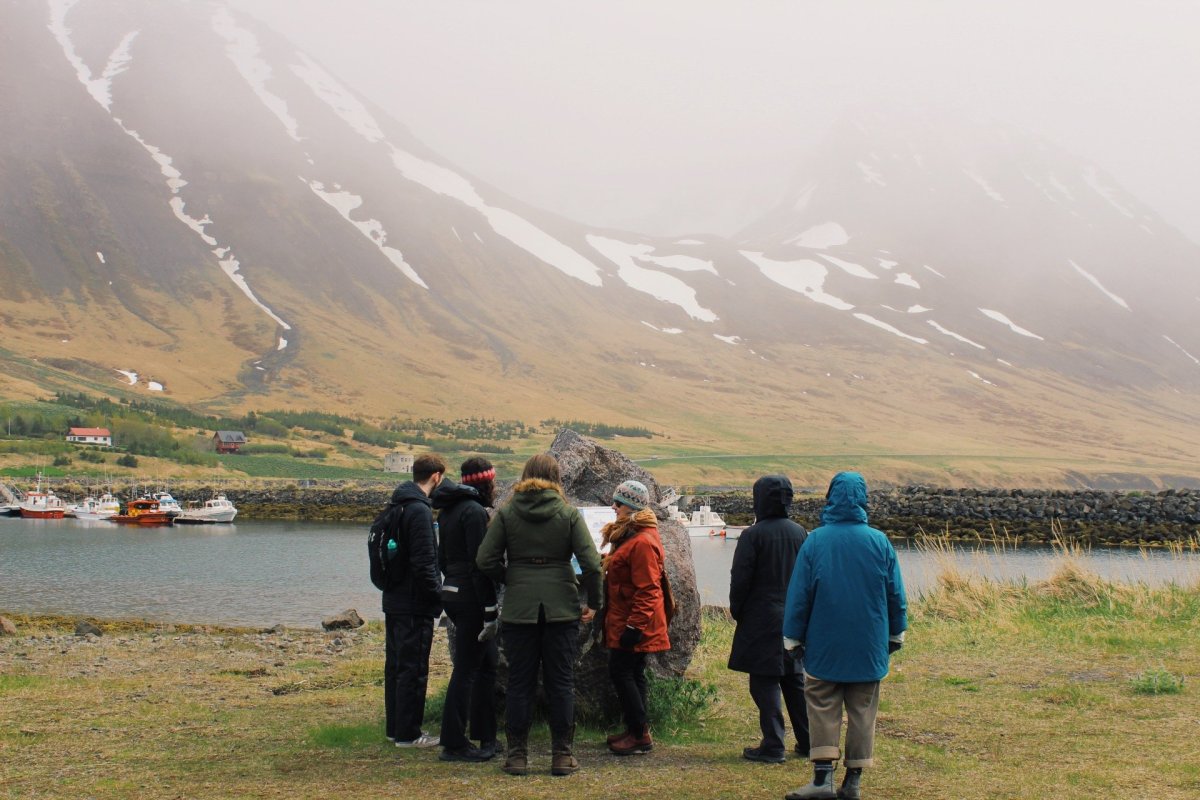
From April 13 to 24, students at the University Centre of the Westfjords took part in two courses that approached environmental knowledge from different angles: Environmental Impact Assessment and Science Communication.
In Environmental Impact Assessment, students were introduced to the key concepts and methods used in environmental assessment, both for individual projects and for plans, programmes and policies. The course focused on the practical side of Environmental Impact Assessment and Strategic Environmental Assessment, including the challenges that can arise when assessments are prepared and used in decision-making.
Taught by Ólafur Arnarson, the course gave students the opportunity to work with real examples, including ongoing local cases. During the course, students looked at past environmental impact studies, discussed their strengths and weaknesses, and explored questions of scientific quality, regulations and environmental management systems.
At the same time, another group of students took part in Science Communication. This hands-on workshop focused on how scientific content can be shared clearly and creatively, both within academia and with wider audiences. The course encouraged students to think about how research can be heard, understood and used to create conversation.
The course was taught by Dr. Jennifer Rock, who brings a broad interdisciplinary background to her teaching. With a BA in Human Ecology and a PhD in Zoology, Jennifer works in the space between science, arts and the humanities, and is connected to research institutions in New Zealand, Iceland and the USA.
Students in Science Communication practised different ways of presenting complex material, from articles and reports to oral presentations and narrative-based science communication. The course drew on fields such as natural and social sciences, environmental studies, sociology, psychology, cultural studies, art and design, giving students a wide range of tools to strengthen their communication skills.
Although the students were working in different courses, both groups spent the two weeks developing practical skills that are highly relevant beyond the classroom: one group focusing on how environmental impacts are assessed and managed, and the other on how scientific knowledge can be communicated in clear, engaging and meaningful ways.