
UW students gain practical insight into fisheries science and management
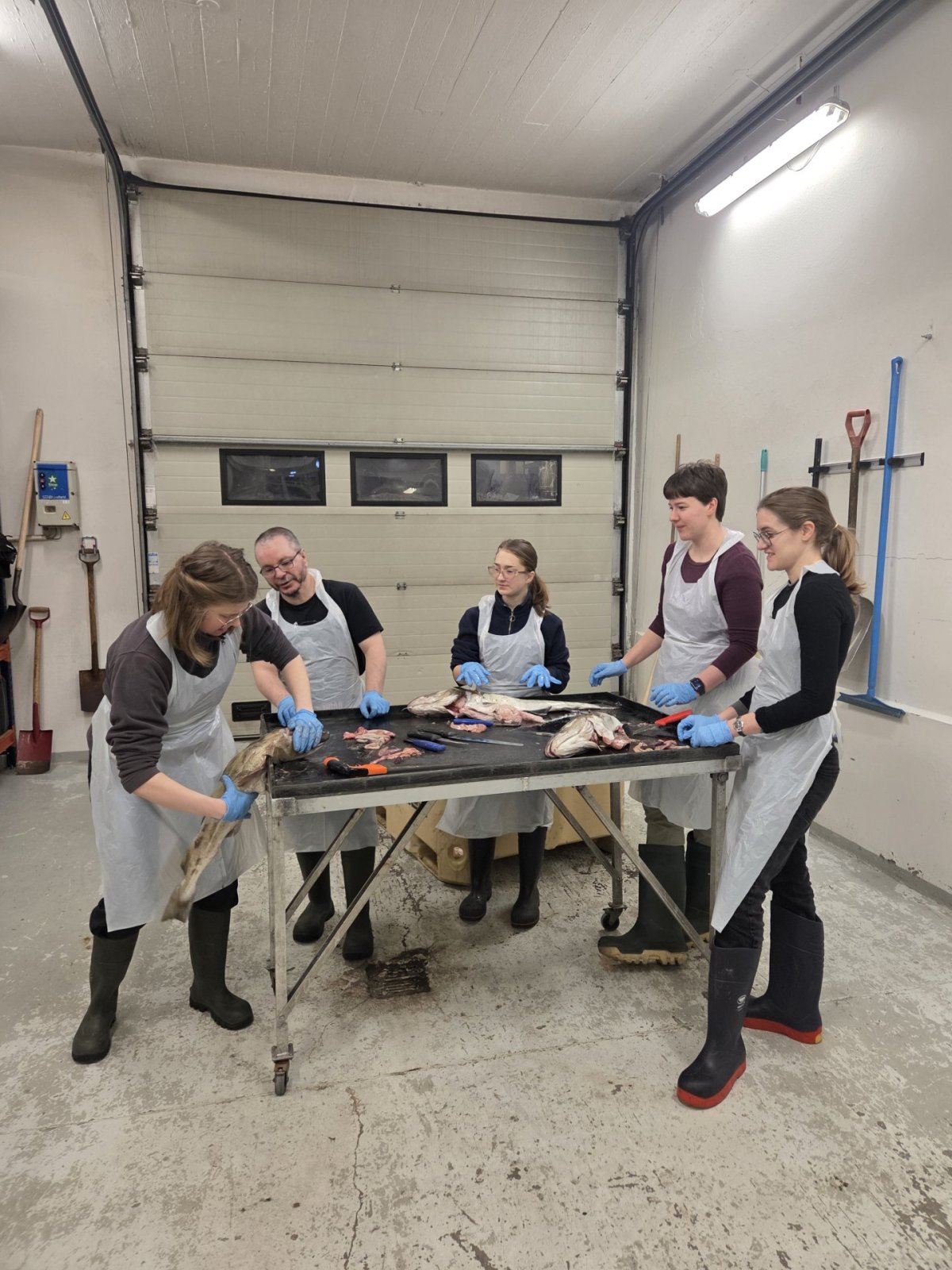
Dr. James Kennedy, fishery biologist at Iceland’s Marine and Freshwater Research Institute (MFRI), is currently teaching the course Fisheries Management and Technology at UW. The class explores key themes in marine fisheries, including population assessments, fish–habitat associations, life-history, population dynamics, and management. A central message of the course is that effective marine resource management depends on solid fisheries science—science that informs the rules and regulations that shape not only how much fish and other marine life can be harvested, but also where, when, and how harvesting takes place.
MFRI is Iceland’s largest research institute in the field of marine and aquatic research and plays an important advisory role in the rational use and protection of marine and aquatic resources. To support that role, the institute conducts scientific surveys of marine life and fisheries. This week, students had the chance to connect course concepts to real-world research methods through hands-on work—an important part of the course, where students aim to learn how to collect and evaluate scientific data related to fishery biology and fishing activities.
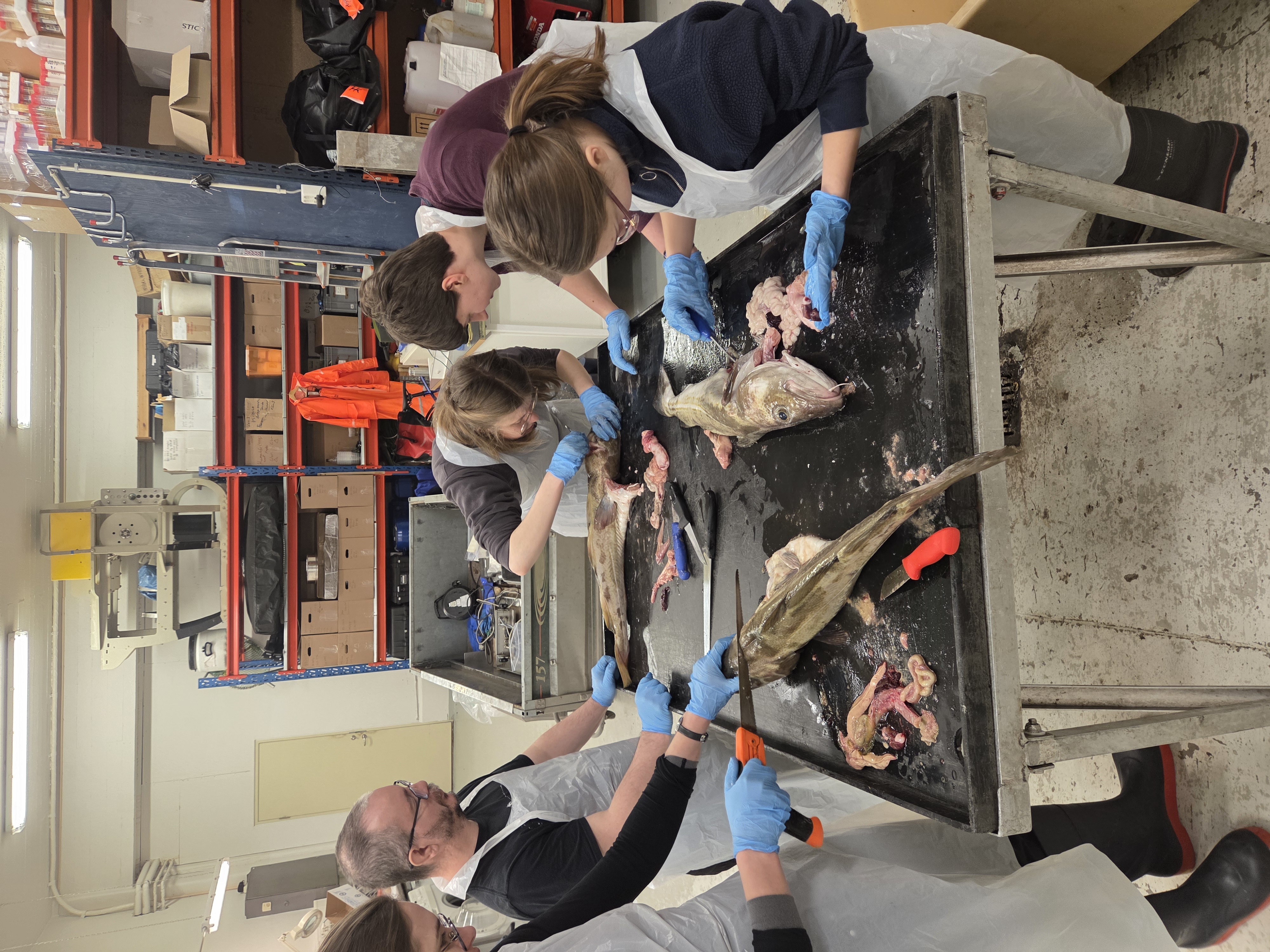 Under Dr. Kennedy’s guidance, the students dissected Atlantic cod and lumpfish to gain insight into how catches are sampled during MFRI’s scientific surveys. During these examinations, researchers identify the sex and maturity stage of each fish, and record stomach contents to understand feeding patterns. Students also removed otoliths—small ear bones located inside the skull—which are used to estimate a fish’s age and help build the data behind stock assessments. While this kind of work isn’t everyone’s favorite (dissecting can be a bit confronting for some), it offered a valuable, close-up look at the careful, methodical process behind the numbers that guide fisheries management.