
Captains log - april 2026
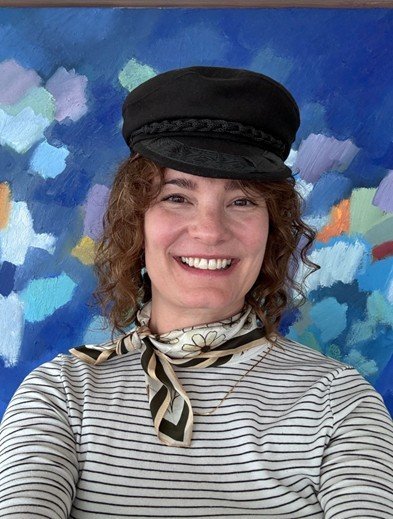
Time flies – like when your kids grow up too fast, when you go down a rabbit hole on the internet, or when you are the new director of the University Centre of the Westfjords. It is unbelievable that one month has gone by since I took over April 1st. There has been a lot to do, many exciting tasks both big and small: for example learning how long it takes to change passwords, or deciding how exactly one should inherit 20 years of files, information, and experience. I am very thankful for all the good folks around me who have helped during this transition time.
I have always liked the informal posts of people in leadership positions who give a recap of their activities. We try to post news but it is also nice to have a bit of context about what is happening here “in house.” Therefore I plan to write a monthly overview of the highlights of UW: my own kind of “Captain’s log.” (We are known for ocean-themed teaching and research, and I have my small-boat captains license, so I had to call it this!).
This April we have had plenty of guests. For example we have had visits from the municipal electoral candidates. Of course we at UW think that university education, and education in general, should be a key component of all the party lists! Therefore we are always excited to share ideas with political candidates on the strengthening of UW’s core activities in relation to the education and research needs of the Westfjords.
The biggest project in April has been exam time. As the last exam in their studies, our masters students present the results from their thesis research in open lectures. I always learn so much from these presentations: for example, lumpfish stomachs are full of jellyfish, or, there are two kinds of cairns on Hornstrandir! It is also the exam time for distance learning students, and we have been busy proctoring those exams, for example in teacher education, nursing, business studies, law, and media studies.
Two members of Swedish Parliament came to the Westfjords specifically to learn about rural development. We were happy to welcome them to UW and share our experience about masters level education in rural communities, none the least because UW has the explicit goal to support rural development. Related to this, it is an honor to share our paper that has come out which covers the 20 year history of UW as a coastal community development tool.
Finally, one very exciting project now is that we are moving full speed ahead with a new collaborative masters in sustainable production of aquaculture, administered by Hólar University College and with strong partnership from University of Iceland, University of Akureyri, and the Agricultural University of Iceland. The preparatory committee met in Ísafjörður, and we are looking forward to welcoming the first students this autumn. Aquaculture is a growing industry in the Westfjords and it is important for UW to be part of this collaboration in order to respond to the new educational needs in the Westfjords and Iceland as a whole.